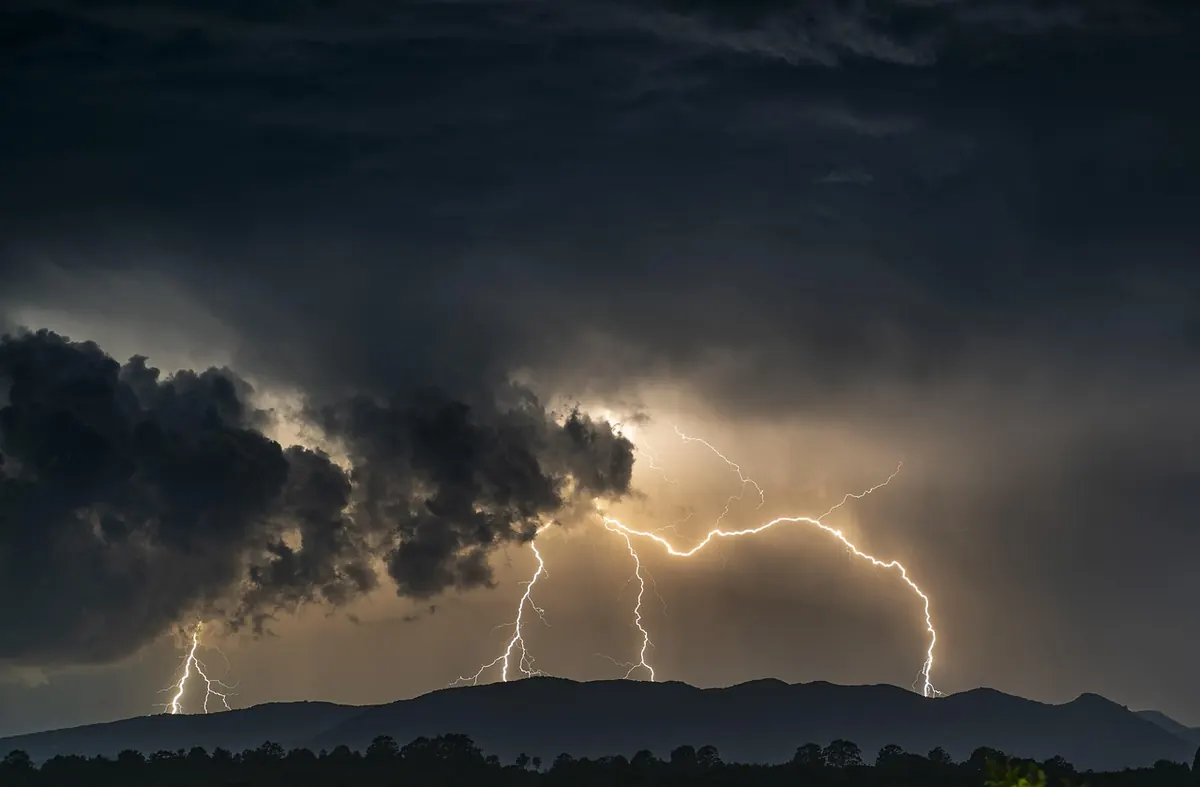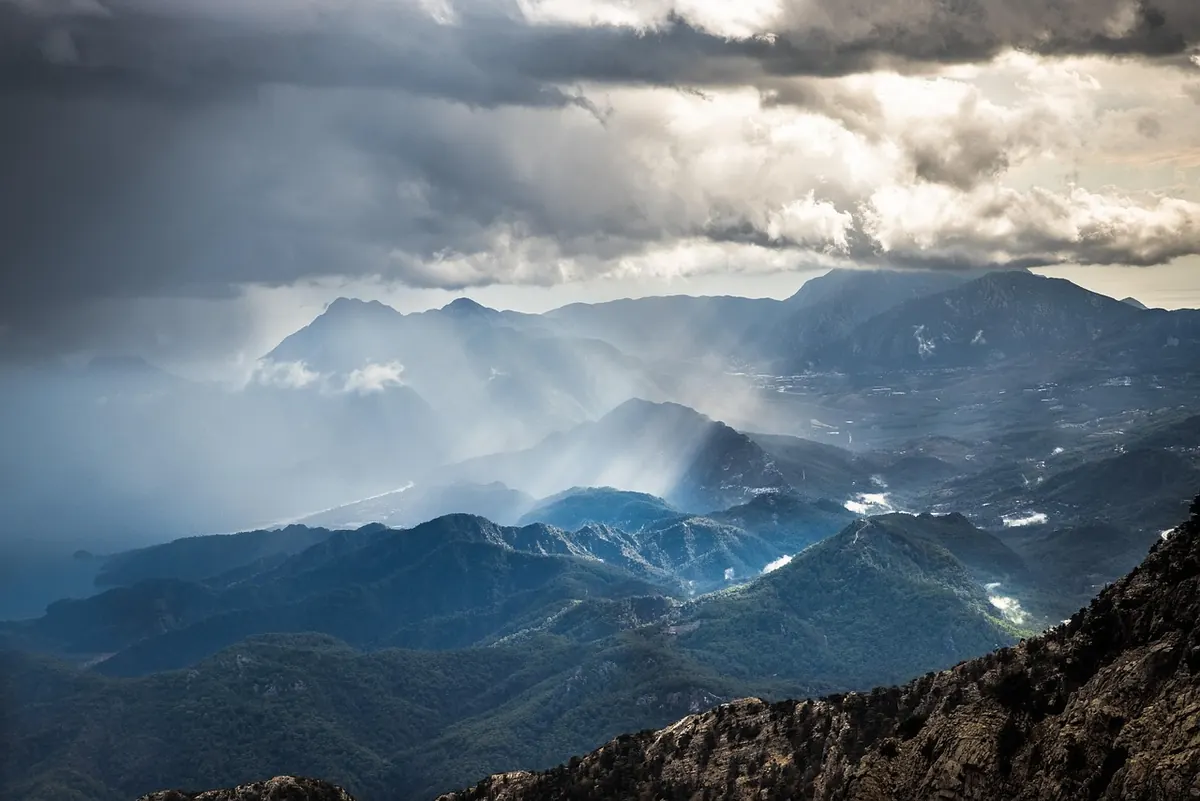
You hear the thunder before you see the cloud. It rolls across the valley, soft at first, then sharper. You are on a bare ridge, a few hundred meters above the last stunted larch, and the sky to the west has turned the color of a bruise. This is the moment to stop taking photographs and start making decisions. A thunderstorm above treeline is not a test of nerve. It is a problem of time, terrain, and simple habits. The right moves are not complicated, but they work best when you begin them early.
Read the Warning Signs Early
The first clue is often a cloud that grows vertically instead of drifting sideways. Watch for a tall, cauliflower-shaped tower with a flat, spreading top, like an anvil. A dark, bruised base, sudden hail or graupel, a sharp drop in temperature, and a wind that shifts or strengthens without warning all point to the same thing: the storm is building, and it is close enough to matter.
Thunder is the clearest confirmation. Count the seconds between the flash and the bang. Sound travels roughly a mile in five seconds, so a short gap means the storm is near. If you count less than thirty seconds, it is time to move. The usual guidance is to be in a safer place before the storm arrives, then wait at least thirty minutes after the last thunder before leaving shelter. Do not use the first raindrop as your starting signal. By then you may already be on the worst part of the ridge.
Decide Before You Are Certain
Uncertainty is what gets people into trouble. The cloud may pass. The thunder may stay distant. The summit may be only twenty minutes away. Decide now, not when your hair starts to stand up. Before you leave the trailhead, set a simple weather trigger: if you hear thunder or see an anvil cloud, you turn around. No debate on the ridge.
Ask three practical questions as soon as the sky changes. Where is the nearest lower ground? How long will it take to get there? Which route avoids the ridge, the summit, and the exposed scramble? If the answer to the last question is “there isn’t one,” you have already stayed too long. On a via ferrata or an exposed rock step, turn back early. The summit is not going anywhere; your margin is.
Descend Off the Ridge, Not Along It
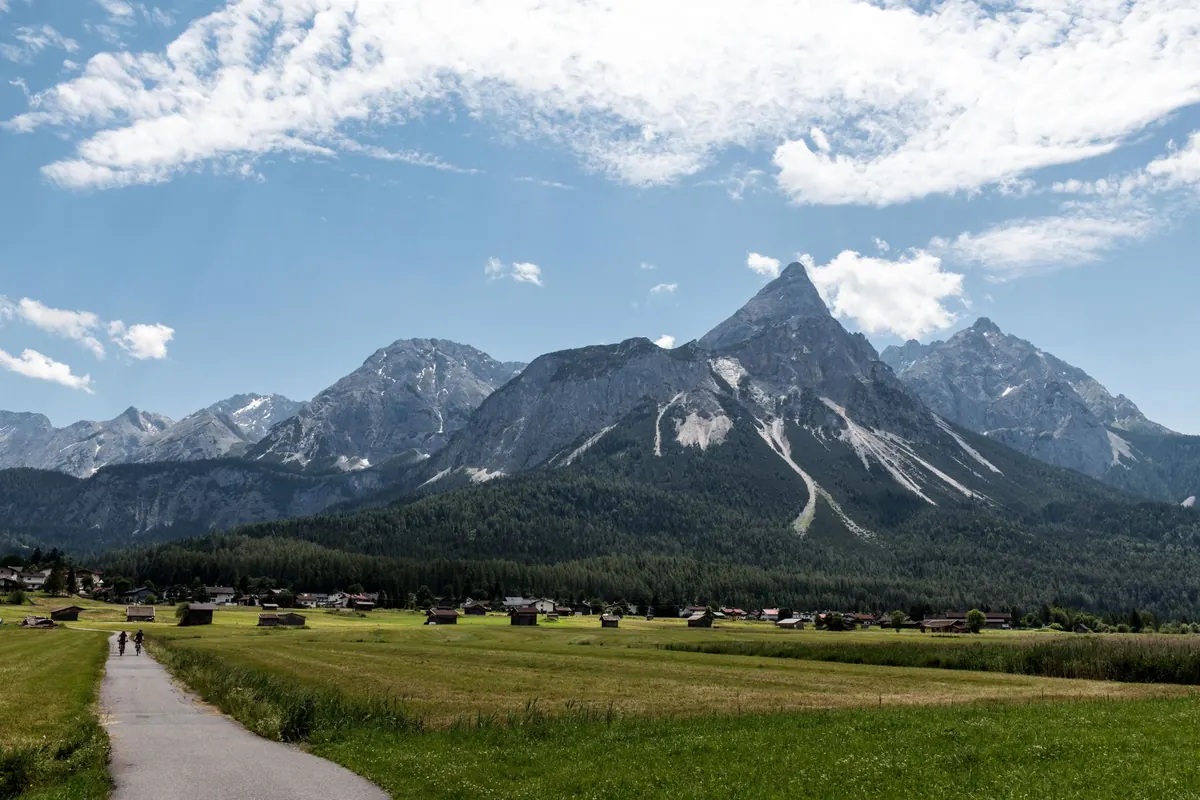
Lightning favors high points and edges. Moving along a ridge keeps you on the worst terrain for longer. Instead, drop off the ridge perpendicular to it, down the fall line, toward lower ground. Aim for a broad valley, a low bench, or a dense stand of trees of similar height. Avoid gullies and streambeds, which can flood quickly even when the rain is falling on another slope.
Stay away from lone trees, ski lift towers, fences, signposts, wet rock slabs, and cave mouths. A shallow cave or overhang can feel like shelter, but rock conducts and lightning can travel through it. If treeline is close, get below it. If it is not, choose a less prominent slope and lower your profile rather than sprinting across open ground. Put on your rain shell and a warm layer before you stop moving. Cold and wet is its own problem, and it makes every other decision harder.
Lower Your Profile and Keep the Group Calm
Once you are off the ridge, the risk is not zero. Spread the group out if you are in the open, roughly fifteen to twenty meters apart, but keep visual contact. Do not huddle together. Keep metal gear away from your body: trekking poles, an ice axe, crampons, a metal-framed pack. If you can set equipment down safely a few meters away, do it, but do not create a trip hazard or lose gear you will need later.
- Move one at a time on short exposed steps, so a slip does not take the whole group.
- Keep your pack low and close; do not raise it above your head.
- Avoid water, wet cracks, and the mouths of caves or overhangs.
- Do not shelter under a single tree or a small group of isolated trees.
- Keep talking. Calm voices prevent rushed decisions.
If the storm is directly overhead
If you feel tingling, hear buzzing, or see your hair rise, you are in the strike zone. Crouch low on the balls of your feet, tuck your head, cover your ears, and keep your feet close together. Minimize your contact with the ground. Do not lie flat, and do not gather in a tight circle. This is a last-resort position, not a shelter. Stay there only until the immediate threat passes, then move to better terrain.
If You Are Caught in the Open
- Move immediately toward lower, less prominent ground. Do not run along a ridge to reach a distant hut.
- Separate from the rest of the group if you are in open ground, but stay within sight.
- Set down metal equipment a few meters away if it is safe to do so.
- Crouch low on the balls of your feet if lightning is imminent. Do not sit or lie on the ground.
- Wait for the storm to move before crossing exposed ground again. Use the gaps between flashes, not the first lull.
- Watch each other for confusion, shivering, or slurred speech. Cold and fear can look like poor coordination.
If someone is struck by lightning, call emergency services and follow their instructions. Do not delay the call because the storm is still nearby.
After the Last Thunder
Wait at least thirty minutes after the last thunder before you leave shelter. The storm may look gone while the back edge is still producing strikes. When you do move, expect wet rock, slick grass, and loose soil. Check the group for cold hands, shivering, and tired feet. A fast descent in bad conditions is not worth a twisted ankle or a fall.
Do not rush back up just because the sun comes out. Storms can rebuild in the same place, and the ground stays wet long after the clouds pass. Note where the weather came from. If it arrived from the west, the next cell may follow the same track. Make your way down, or choose a low route to your exit.
The Checklist That Fits in Your Head
Before you go: check the forecast, identify an escape route, set a turnaround time, and pack a rain shell and warm layer. On the ridge: watch the cloud, count the seconds, descend early, avoid the ridge line, spread out, crouch if lightning is imminent, and wait thirty minutes after the last thunder. Keep it simple, start early, and give yourself permission to turn around. That is the whole skill.
Photo: shirinh / Pixabay